
Data & Analytics Maturity
Where does your organisation stand between spreadsheet islands and data-driven decisions? Five areas, a maturity profile and an instant report.
The live demo opens the real questionnaire — no signup required.
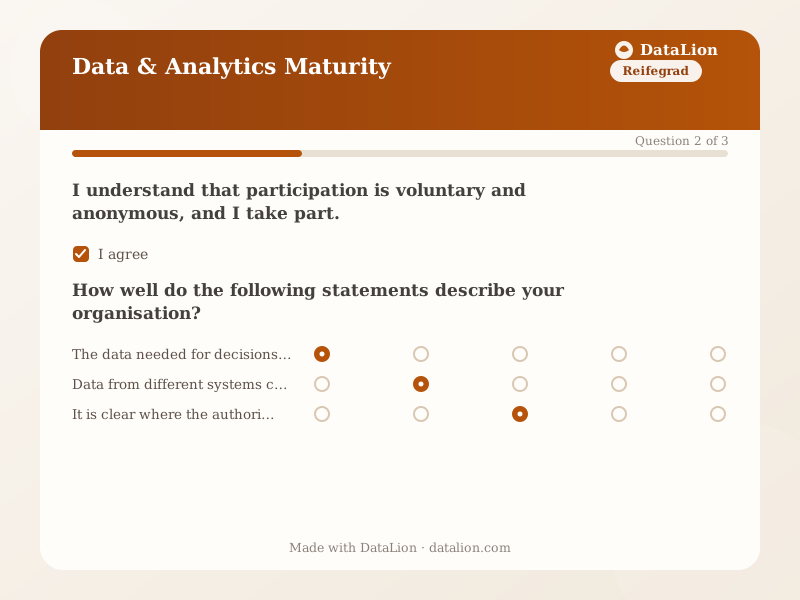
Most maturity models for data and analytics distinguish between what exists technically and what is actually used. In practice that is where the value is decided: organisations invest in platforms and discover years later that decisions are still made on instinct. This self-check therefore separates five areas – availability, quality and governance, analytical skills, use in decisions, and scaling – and makes the gap between them visible. It is deliberately a self-assessment rather than an audit; its value lies in the conversation the results start.
When should you use this template?
This template is a great fit for:
- At the start of a data or BI strategy
- As a baseline in the leadership team before an investment decision
- As a recurring annual measure
Every question in this template
- 1Consent
I understand that participation is voluntary and anonymous, and I take part. *
- 2Matrix
How well do the following statements describe your organisation? *
Not at all Rudimentary Partly Largely Fully The data needed for decisions is accessible without special requests. Data from different systems can be brought together. It is clear where the authoritative source for each data set lies. Key metrics are defined and documented consistently. There is named ownership for data quality. - 3Multiple choice
Which data sources are already centrally integrated in your organisation?
Select all that apply.
- ERP / inventory management
- CRM / sales
- Web and campaign data
- Survey and feedback data
- HR data
- Production or sensor data
Related survey templates
- CSRD Double Materiality Assessment (Stakeholder Survey)Stakeholders rate the ESRS topic areas by impact and financial materiality – the data basis for your CSRD materiality matrix.
- General FeedbackCollect quick and simple general feedback on your company, product or service – including an overall rating and recommendation.
- Big Five Personality Self-AssessmentA compact IPIP-based self-assessment of extraversion, agreeableness, conscientiousness, emotional sensitivity and openness – with a personal radar profile.
- Data Culture Compass: Where Does Your Organisation Stand?Two axes, sixteen statements: how easily do your people reach data, and how often do decisions rest on it? The result is a field in a four-field matrix.
Frequently asked questions
Who should complete the check?
Why a multiple-choice question about data sources?
Start with this template
Load the template into DataLion, adapt it to your brand and start collecting responses — GDPR-compliant, in minutes.