
Analysis & statistics
Auto-code your open-ended responses
No more reading verbatims line by line: DataLion classifies every open-ended answer by AI sentiment and topic — and writes the results back as new variables you crosstab, weight and track like any other. Ready-made report included.
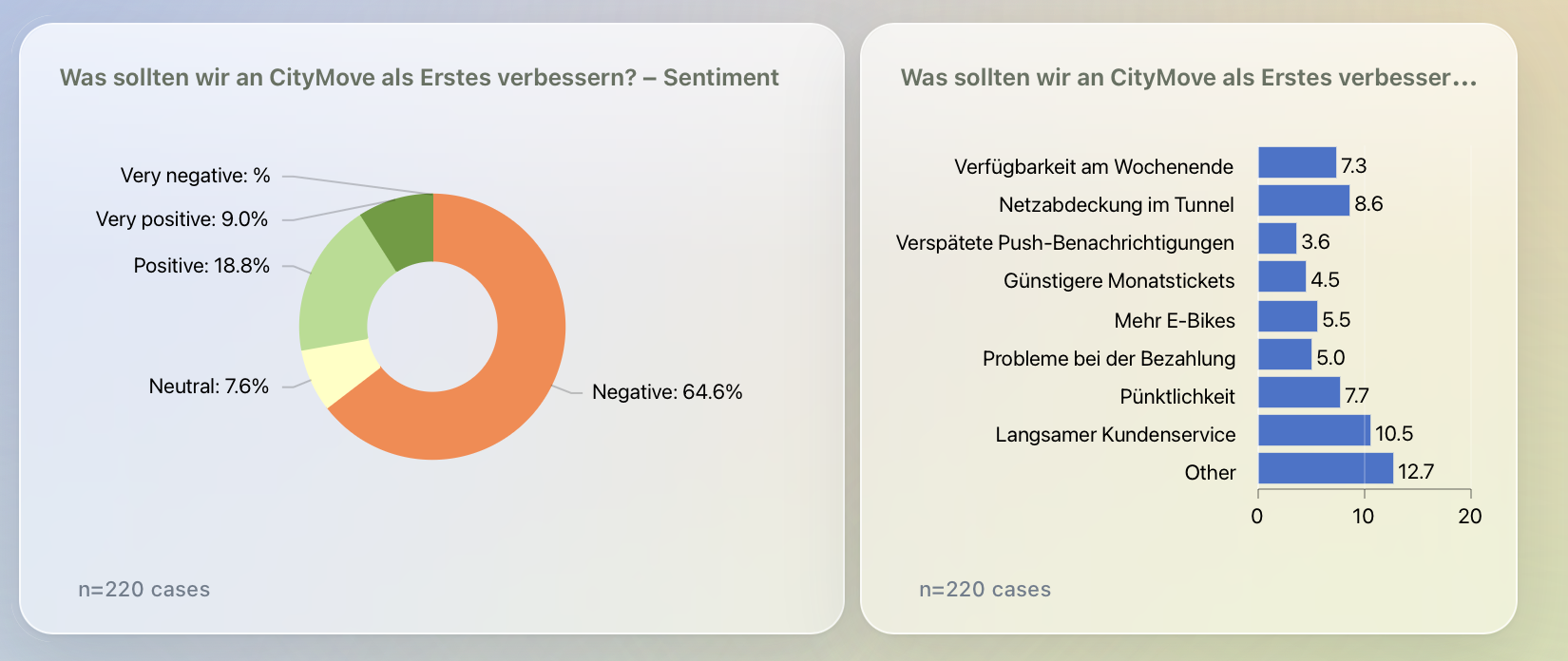
DataLion auto-codes open-ended responses with AI: each answer is classified by sentiment (binary, 3- or 5-point, or custom labels such as detractor/passive/promoter) and an auto-discovered topic. The results land as three new variables — sentiment, sentiment score and topic — directly in your dataset, ready to crosstab, weight, significance-test and track across waves.
- 🇩🇪 Made in Munich
- GDPR-compliant
- DPA included
- Hosted in Germany
- 🌐 Interface in EN, DE, FR, ES, IT & NL
Trusted by research institutes, brands & insights teams






- 50+ interactive chart types
- 20+ statistical methods
- SPSS · Excel · CSV import without data loss
- ISO 27001 certified data centers (Germany)
Open text is the most expensive question on the survey
Open ends are often the most valuable answers — and the ones that sit untouched the longest. Coding them by hand is slow, costly and barely consistent across coders. A word cloud shows the most frequent terms, but not whether they are meant positively or negatively.
DataLion does the coding for you: pick an open-text variable and the AI classifies every single answer by sentiment and topic — turning thousands of verbatims into a structured, analyzable dataset in minutes.
- No more reading line by line
- Consistent coding instead of coder drift
- Sentiment plus topic — not just word frequency
- Thousands of open ends per run
Pick a scale, discover topics, run
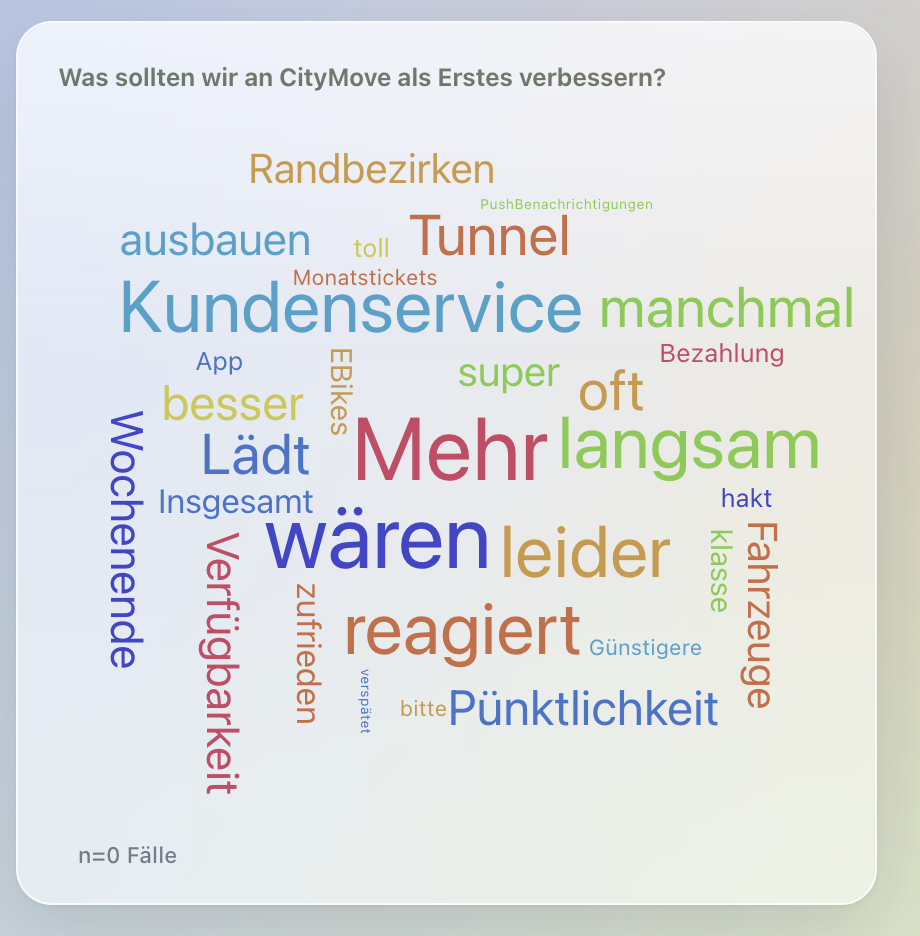
You choose the open-text variable and a sentiment scale: binary (negative/positive), 3-point (negative/neutral/positive) or 5-point (very negative … very positive). Or supply your own ordered labels — for instance the NPS logic detractor, passive, promoter. Each class automatically gets a code and a numeric score.
For topics, you have the choice: DataLion discovers them automatically from a sample of your responses (up to 8, configurable) — or you supply your own codeframe (e.g. "pricing, support, usability") that is then used verbatim. An Other bucket catches anything that does not fit.
- Sentiment scale binary / 3-point / 5-point
- Or custom labels ordered from negative to positive
- Discover topics automatically or supply a codeframe
- Topics come back in the language of the responses
Three new variables — not just a pretty chart
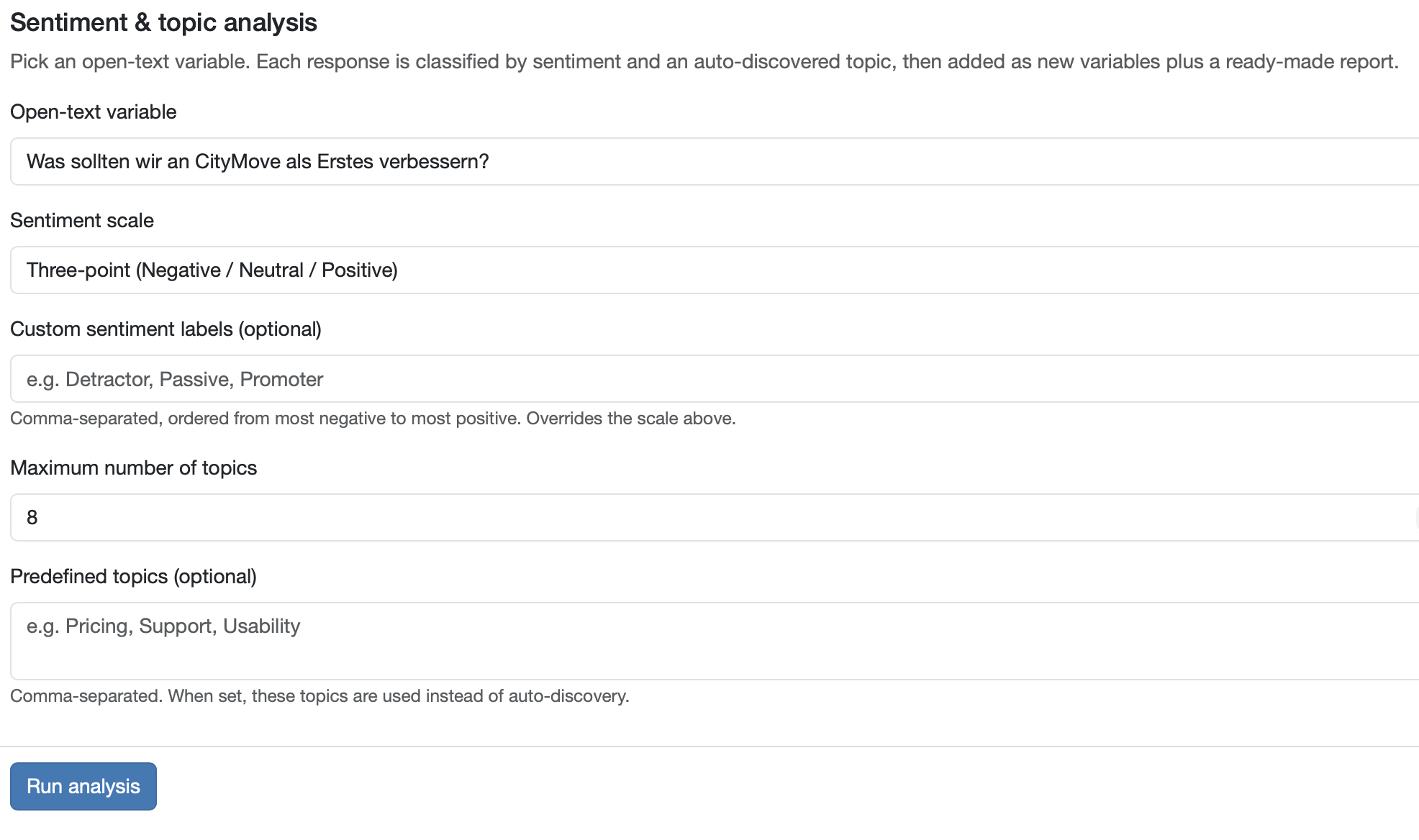
Instead of an isolated text report, DataLion writes the results back as three real variables in your dataset: a sentiment (categorical, coded and labeled), a numeric sentiment score (averageable) and the topic (categorical). They live in the codebook like any other variable.
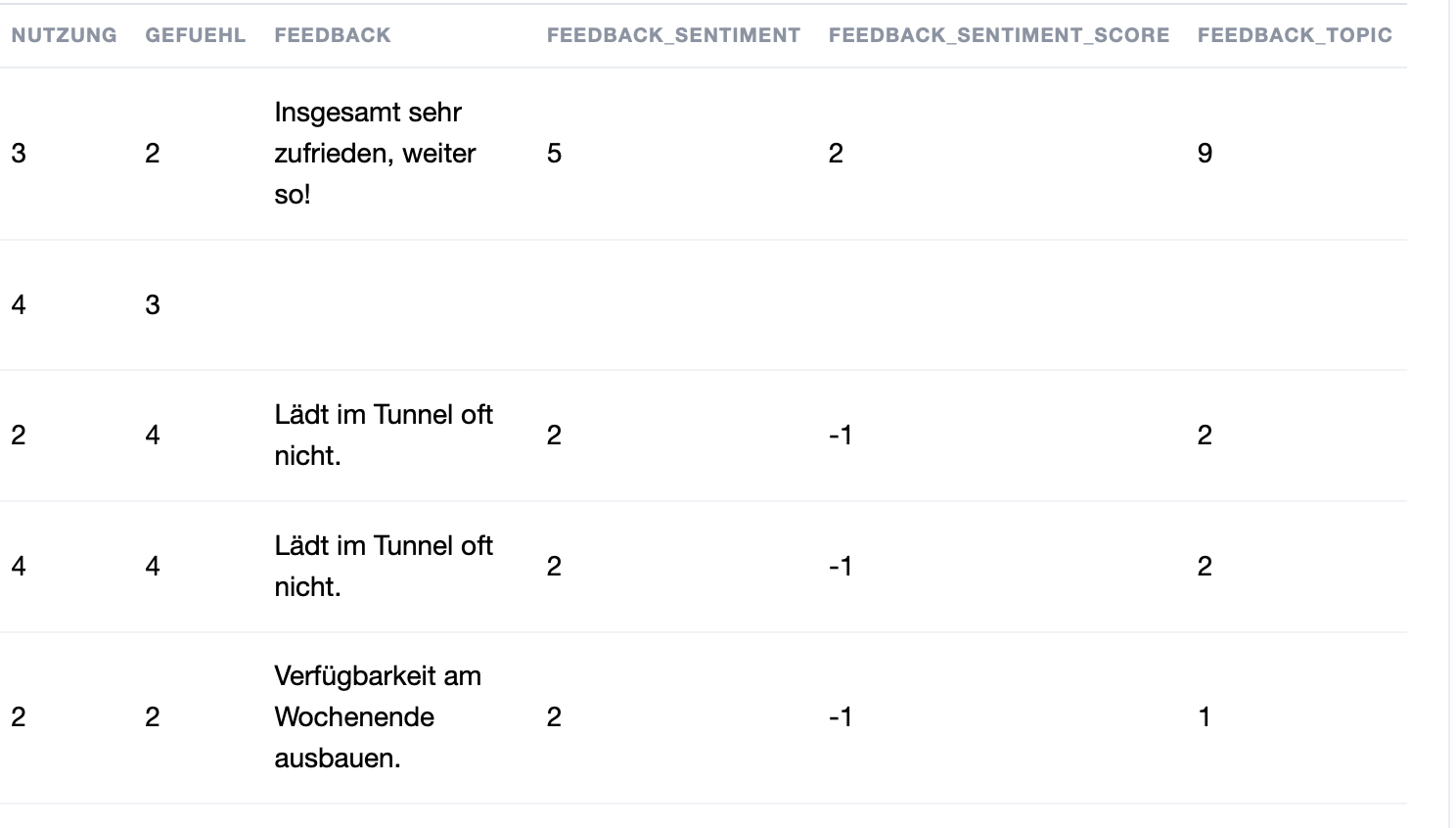
So the coded sentiment flows straight into your usual analysis: crosstabs (sentiment × audience), weighting, significance tests, top/bottom-box, trackers across waves and native PowerPoint export. DataLion also builds a ready-made report with a sentiment chart and a topic chart — pair it with the word cloud for the same question.
- Sentiment (categorical) + sentiment score (numeric) + topic (categorical)
- Crosstab sentiment by segment and significance-test it
- Track across waves — is the mood shifting?
- Ready-made report included, native PowerPoint export
From NPS verbatims to brand trackers
The method fits anywhere open text shows up: the "why?" behind your NPS, open ends in brand tracking, customer feedback, employee surveys or product reviews. With custom labels you map any scale that fits your study.
Framed honestly: classification runs through an LLM (large language model). The LLM endpoint is configurable — for full data control you can point it at a self-hosted, EU or on-premise model rather than an external service. The DataLion platform and your data sit in ISO 27001-certified data centers in Germany. Coding works on any open-text column in the dataset — collected in DataLion or imported from Excel, CSV or SPSS.
- NPS and CX verbatims, brand tracking, HR and product feedback
- Custom labels for any scale logic
- Configurable LLM endpoint (self-hosted / EU / on-premise)
- Platform hosted in Germany, GDPR-compliant
See DataLion with your own data
Start free with your own raw data. Or book a personal demo of the path to a finished dashboard.
What users say about DataLion
- via G2
The embedding function allows us to generate insights of our data for our audience and customers by far less than half of the usual time needed before.
Verified user · Leisure, Travel & Tourism - via G2
User-friendliness, especially for market research topics. Structured backend with many customization options.
Verified user · Market Research - via G2
The contacts at DataLion are very committed. If you have problems, you can count on help. DataLion reacts quickly to requests for new functions.
Robert Q. · Managing Director - via G2
Very professional company, attentive to the customer needs, provider of a great software and service.
Generoso M. · CRM Analyst, Automotive

We now work much more efficiently, giving us more time to take care of the derivations and insights from the data for the customers.
More analysis features
Guides in the help center
Common questions about sentiment & topic analysis
How does DataLion code open ends?
Which sentiment scales are available?
Are topics discovered automatically?
What can I do with the results?
Where does my open text go during the AI analysis?
Auto-code your open ends
Try DataLion free: sentiment and topics from open text via AI — as analyzable variables, not just a picture. Or book a personal demo.