
Citizen Survey on Municipal Heat Planning
The survey municipalities and utilities need before heat planning: heating stock, level of information, trust, willingness to connect to a heat network, obstacles and desired support – analysable per district and housing situation.
The live demo opens the real questionnaire — no signup required.
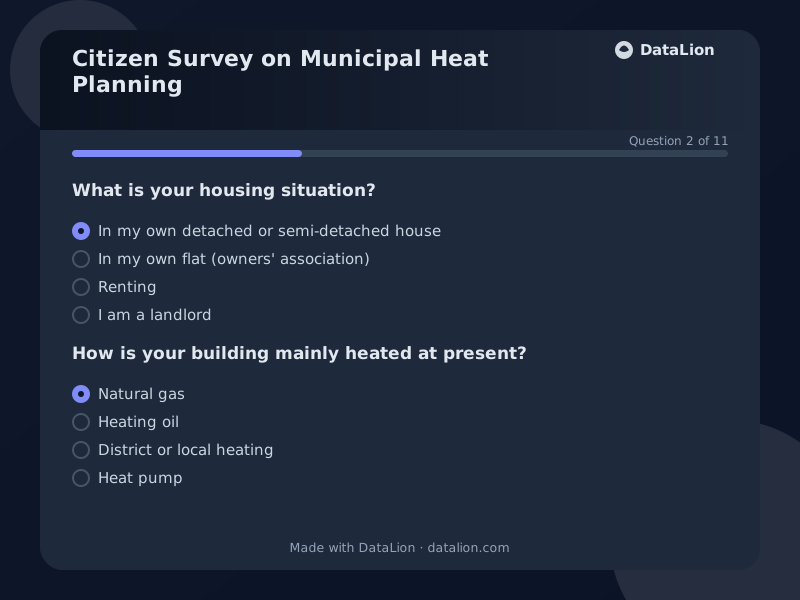
Germany's heat planning act obliges municipalities to present a heat plan, and in doing so they discover two things they do not know: what people heat with today and whether they would connect to a heat network if one came. Neither is in any register. This template asks both, plus the level of information, trust in the municipality's management of the transition and the obstacles that keep owners from replacing their heating. The housing situation at the start separates owners from tenants, whose answers differ on almost every question. A URL parameter per district or suitability area makes willingness to connect readable exactly where the network is being planned.
When should you use this template?
This template is a great fit for:
- Before or during the stock analysis of municipal heat planning
- Via QR code in the official gazette, at the information evening and as a link on the website
- Per suitability area with its own parameter, to estimate the connection rate for a heat network
- As a repeat after two years, to measure the effect of the advice services
Every question in this template
- 1Single choice
What is your housing situation? *
- In my own detached or semi-detached house
- In my own flat (owners' association)
- Renting
- I am a landlord
- 2Single choice
How is your building mainly heated at present? *
- Natural gas
- Heating oil
- District or local heating
- Heat pump
- Wood or pellets
- Electricity (storage or direct heating)
- 3Single choice
How old is the heating system?
- Under 10 years
- 10 to 20 years
- Over 20 years
- I do not know
- 4Single choice
How well informed do you feel about municipal heat planning? *
- Very well
- Well
- Not very well
- Not at all
- I have never heard of it
- 5Matrix
To what extent do you agree with the following statements?
Disagree Tend to disagree Tend to agree Fully agree I know what the heat plan means for my building. I trust the municipality to manage the heat transition well. The cost of the transition worries me. I would connect to a heat network if it were available in my street. I plan to replace my heating within the next five years. - 6Single choice
Which heating solution would you prefer for your building when the current system has to be replaced?
- Connection to a heat network
- Heat pump
- Hybrid heating (heat pump and gas)
- Wood or pellets
- Hydrogen or biogas
- I do not know yet
- 7Multiple choice
What currently keeps you from replacing your heating?
Multiple answers possible.
- The investment cost
- Uncertainty about subsidies and legislation
- Structural conditions of my building
- Lack of information
- Availability of tradespeople
- I am waiting for the heat plan
- 8Multiple choice
What support would you like from the municipality?
Please choose up to three.
- Free energy advice
- Overview of subsidy programmes
- Information evenings in the district
- A dedicated contact person
- Neighbourhood solutions and group purchasing
- Clear maps of what is planned where
- 9Single choice
How would you like to be informed about heat planning?
- Official gazette or letter
- Municipal website
- Information evening
- Newsletter or email
- Social media
- 10Long text
What would you like to tell the administration about heat planning?
- 11Single choice
Which age group are you in?
- Under 30
- 30 to 44
- 45 to 59
- 60 and older
From questionnaire to dashboard
The questionnaire produces a dashboard for heat planning, climate management and the council:
- Willingness to connect per district: Agreement to connect to the heat network against district and housing situation. The table that decides where the network is built first.
- Level of information and trust: The agreement matrix as diverging bars: how many know what the heat plan means for their house, and how many trust the municipality to manage it.
- Obstacles and support wishes: What keeps owners from replacing their heating and what help they want, as a ranking. The basis for the advice programme.
Go deeper
Related survey templates
- Citizen Survey for MunicipalitiesAnonymous citizen survey on satisfaction with municipal services and local quality of life – a sound basis for decisions in the council and administration.
- Participatory BudgetingInvolve your residents in allocating municipal funds – with project prioritisation and a transparent distribution of the budget.
- Volunteer SurveyAnonymous survey of your volunteers on recognition, support and sense of purpose – so that volunteering is sustained and supported over the long term.
- Member Survey (association, chamber, guild)The member survey for trade and professional associations: satisfaction with and importance of services, advocacy, topic wishes, channels, recommendation and intention to cancel.
Frequently asked questions
How do we estimate the connection rate for a heat network from the survey?
How do we reach older owners who do not answer online?
Is the survey representative?
Start with this template
Load the template into DataLion, adapt it to your brand and start collecting responses — GDPR-compliant, in minutes.