
Brand Tracker (wave survey)
The full brand funnel with named Waves, case counts and automatic previous-Wave comparisons: awareness, consideration, usage, advocacy and image profile.
The live demo opens the real questionnaire — no signup required.
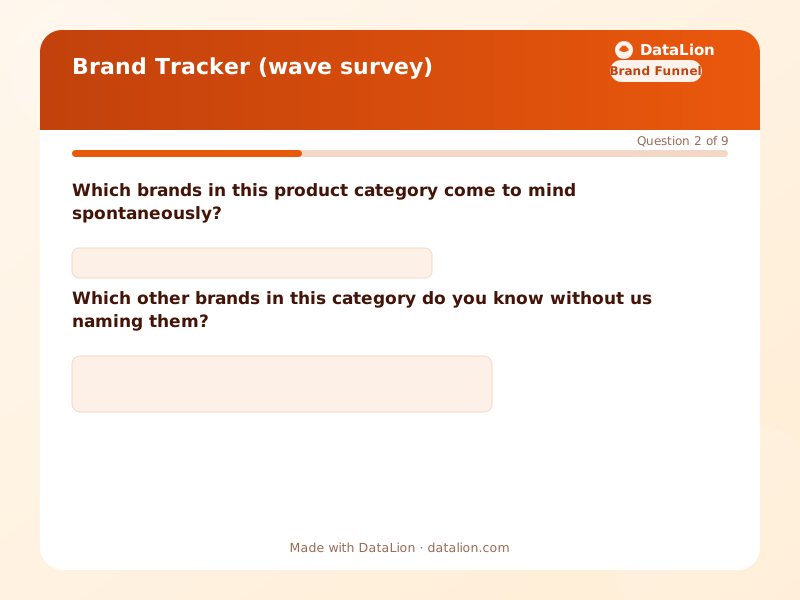
A brand tracker measures development, not a state. DataLion therefore manages every fieldwork period as a named Wave with its own case count, dates and export; filters, timelines, benchmarks and significance tests automatically compare the selected Wave with its predecessor. The questionnaire stays stable from Wave to Wave and covers the complete brand funnel: unaided awareness (top of mind), aided awareness, consideration, usage, advocacy and the image profile.
When should you use this template?
This template is a great fit for:
- You want to follow brand development across quarters or years rather than take a snapshot
- You are measuring campaign impact and need a before/after comparison
- You want to know at which funnel stage you lose ground against competitors
- You report regularly to management and need comparable figures
- You are replacing an existing tracker and want the questionnaire logic documented
Every question in this template
- 1Short text
Which brands in this product category come to mind spontaneously?
Please name the brand you think of first.
- 2Long text
Which other brands in this category do you know without us naming them?
Please name all further brands that come to mind.
- 3Multiple choice
Which of the following brands do you know, at least by name?
Multiple answers possible.
- Our brand
- Competitor A
- Competitor B
- Competitor C
- Competitor D
- Competitor E
- 4Multiple choice
Which of these brands would you seriously consider when buying?
Multiple answers possible.
- Our brand
- Competitor A
- Competitor B
- Competitor C
- Competitor D
- Competitor E
- 5Single choice
Which brand do you currently use most often?
- Our brand
- Competitor A
- Competitor B
- Competitor C
- Competitor D
- Competitor E
- 6NPS (0–10)
How likely are you to recommend the brand you use?
0 = not at all likely, 10 = extremely likely.
- 7Matrix
How well do the following attributes fit our brand?
Please rate each attribute separately.
Does not apply at all Rather does not apply Partly Rather applies Fully applies Trustworthy Innovative Good value for money High quality Likeable - 8Single choice
Where have you come across advertising or posts about brands in this category in the past four weeks?
- Television
- Online advertising / social media
- Search engine
- Print / billboard
- Recommendation from people I know
- In store / at the point of sale
- 9Long text
What else comes to mind about our brand?
Optional — any thought helps us.
Related survey templates
- Conjoint Analysis: Product PreferencesUse a Choice-Based Conjoint analysis to learn which features and which price really drive purchase decisions – respondents repeatedly choose their preferred offer from realistic product combinations.
- Shopper Style Analysis (Consumer Styles Inventory)Eight scientifically described shopping styles from quality-conscious to impulsive – as a personal profile with your two strongest styles.
- Gabor-Granger Price TestThe classic pricing method: purchase intent at several price points yields a demand curve and the revenue-optimal price.
- What Kind of Player Are You?Achiever, explorer, socialiser or challenger? Sixteen statements, four play motivations and your personal player type.
Frequently asked questions
How often should a brand tracker run?
Why must the questionnaire not change between waves?
How many competitors should I include?
What sample size do I need per wave?
How large must a change be to be real?
Why does the unaided question come before the aided one?
Start with this template
Load the template into DataLion, adapt it to your brand and start collecting responses — GDPR-compliant, in minutes.