
Shopper Style Analysis (Consumer Styles Inventory)
Eight scientifically described shopping styles from quality-conscious to impulsive – as a personal profile with your two strongest styles.
The live demo opens the real questionnaire — no signup required.
In 1986 George Sproles and Elizabeth Kendall described eight decision-making styles people use when shopping – from quality- and brand-conscious through price-conscious and impulsive to habitual and confused by overchoice. The Consumer Styles Inventory has since become one of the most replicated instruments in consumer research and has been validated in many countries. For market research it is doubly attractive: participants read it as an entertaining type test, while it delivers a genuine, research-based segmentation – the same data that feeds the personal report aggregates into a robust audience typology.
When should you use this template?
This template is a great fit for:
- As a segmentation instrument in retail and consumer goods studies
- As a high-reach self-check in marketing campaigns
- To describe audiences beyond age and income
Every question in this template
- 1Consent
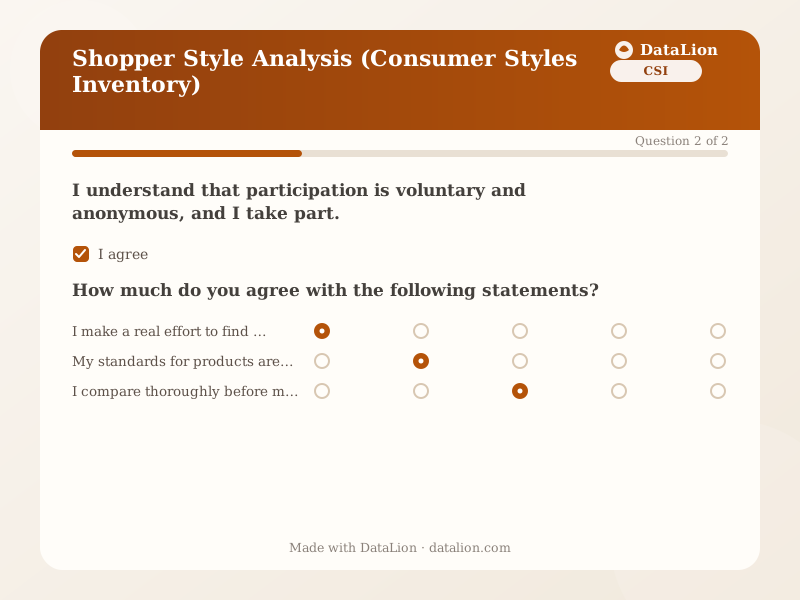
I understand that participation is voluntary and anonymous, and I take part. *
- 2Matrix
How much do you agree with the following statements? *
Strongly disagree Disagree Neutral Agree Strongly agree I make a real effort to find the very best quality. My standards for products are high. I compare thoroughly before making a larger purchase. Well-known brands are a promise of quality to me. More expensive products are usually better.
Related survey templates
- Brand Tracker (wave survey)The full brand funnel with named Waves, case counts and automatic previous-Wave comparisons: awareness, consideration, usage, advocacy and image profile.
- Conjoint Analysis: Product PreferencesUse a Choice-Based Conjoint analysis to learn which features and which price really drive purchase decisions – respondents repeatedly choose their preferred offer from realistic product combinations.
- Gabor-Granger Price TestThe classic pricing method: purchase intent at several price points yields a demand curve and the revenue-optimal price.
- What Kind of Player Are You?Achiever, explorer, socialiser or challenger? Sixteen statements, four play motivations and your personal player type.
Frequently asked questions
Can you have several styles at once?
Is this suitable for real segmentation?
Start with this template
Load the template into DataLion, adapt it to your brand and start collecting responses — GDPR-compliant, in minutes.