
Beta Test Feedback
Structured feedback from beta testers: usage depth, stability, missing features and the disappointment question as an early product-market-fit indicator.
The live demo opens the real questionnaire — no signup required.
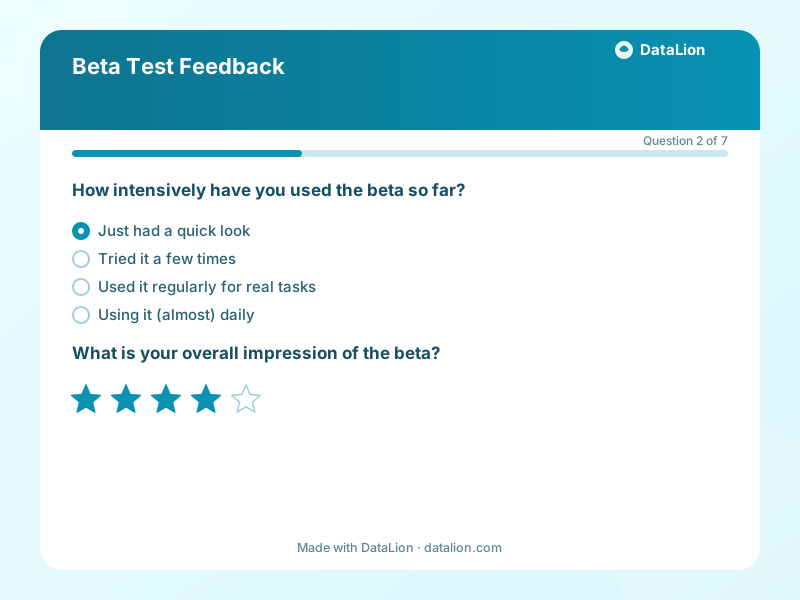
Beta phases rarely fail for lack of feedback – they fail because it evaporates unstructured across chats and emails. This template consolidates your testers' input into comparable data: how intensively was the product really tested? How do onboarding, stability and feature depth score? Which issues occurred most often? Plus the Sean Ellis disappointment question in its beta variant – showing before launch whether genuine product-market fit is emerging. An interview opt-in at the end turns the most interesting answers into your next user research calls.
When should you use this template?
This template is a great fit for:
- Mid-way and at the end of every beta or early-access phase
- Before the launch decision as a structured go/no-go data basis
- After major feature releases, sent to first users
Every question in this template
- 1Single choice
How intensively have you used the beta so far? *
- Just had a quick look
- Tried it a few times
- Used it regularly for real tasks
- Using it (almost) daily
- 2Rating
What is your overall impression of the beta? *
- 3Matrix
How do you rate the following aspects?
Very poor Poor OK Good Very good Getting started and onboarding Stability and reliability Speed Feature depth Help and documentation - 4Single choice
How disappointed would you be if you could no longer use the product from tomorrow?
- Very disappointed
- Somewhat disappointed
- Not disappointed
- I no longer use it anyway
- 5Multiple choice
Which problems did you encounter?
Multiple answers possible.
- Bugs or crashes
- Confusing interface
- Missing features
- Slow performance
- Problems getting started
- None
- 6Long text
What should we definitely improve before launch?
- 7Contact details
May we contact you for a short call about your feedback? (optional)
- Name
From questionnaire to dashboard
The dashboard turns scattered beta feedback into a prioritised launch checklist:
- Testing depth funnel: From a quick look to daily use: the funnel shows how many testers have real substance behind their feedback.
- Aspect profile: Means for onboarding, stability, speed, feature depth and help – your maturity check per building block before launch.
- Early PMF indicator: The disappointment question as a stacked bar: a “very disappointed” share approaching 40% signals product-market fit – comparable with the PMF template after launch.
- Issue Pareto: The multiple-choice issue list as sorted bars – the 20% of problems causing 80% of the frustration sit at the top.
- Improvement backlog: The open question on the most important improvement, clustered via AI topic analysis – sorted by frequency, this is your pre-launch backlog.
Related survey templates
- Restaurant Guest FeedbackShort, anonymous feedback on food, service and ambience – via QR code on the table, the bill or the menu.
- System Usability Scale (SUS)The standard usability questionnaire: 10 statements, one score from 0 to 100 – comparable with thousands of studies. Includes the established German translation.
- Campsite Guest Survey (post-stay)After departure, collect feedback on pitches, sanitary facilities, team and activities – via QR code at reception, at the barrier or in your departure email.
- Customer Effort Score (CES)Measure how effortlessly your customers could resolve their issue and pinpoint the friction that slows them down.
Frequently asked questions
How many beta testers do we need?
When during the beta should we survey?
What does the disappointment question mean in a beta?
Start with this template
Load the template into DataLion, adapt it to your brand and start collecting responses — GDPR-compliant, in minutes.