
WHO-5 Well-Being Index
The WHO's globally established short questionnaire on mental well-being: five questions, one score from 0 to 100 – free to use and validated in over 30 languages.
The live demo opens the real questionnaire — no signup required.
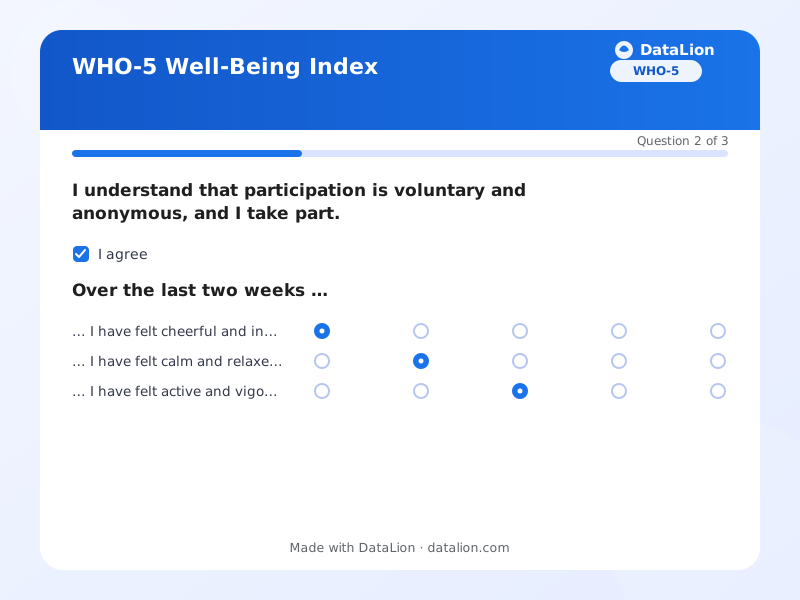
The WHO-5 Well-Being Index was developed by the World Health Organization and is among the best-validated short instruments for mental well-being worldwide: five positively worded statements about the last two weeks, answered on a six-point frequency scale. The raw score (0–25) is multiplied by 4, giving a score from 0 to 100; values below 50 indicate reduced well-being. In workplace health management the WHO-5 is ideal as an anonymous, recurring pulse – short enough for high response rates, established enough to compare against reference values. Important: the WHO-5 is a screening instrument for groups, not a diagnostic tool for individuals.
When should you use this template?
This template is a great fit for:
- As a recurring well-being pulse in workplace health management
- Complementing the psychosocial risk assessment
- Before and after health or workload interventions to measure effectiveness
Every question in this template
- 1Consent
I understand that participation is voluntary and anonymous, and I take part. *
- 2Matrix
Over the last two weeks … *
For each statement, please choose the answer closest to how you have been feeling.
At no time Some of the time Less than half of the time More than half of the time Most of the time All of the time … I have felt cheerful and in good spirits. … I have felt calm and relaxed. … I have felt active and vigorous. … I woke up feeling fresh and rested. … my daily life has been filled with things that interest me. - 3Long text
What would improve your well-being at work the most? (optional)
From questionnaire to dashboard
Five questions, clear analysis: the dashboard translates the WHO-5 logic directly into charts:
- WHO-5 score (0–100): A calculation tile implements the official formula: raw score of the five items (0–25) times 4 – your organisation's well-being score, live with every response.
- Share below threshold: The share of responses scoring < 50 as a KPI tile – the established screening threshold and your most important action metric.
- Score distribution: The histogram shows the whole distribution instead of just the mean – a decent average can hide a struggling minority.
- Item profile: Means per statement show whether energy, rest or day-to-day interest is lacking – the starting point for fitting health measures.
- Well-being trend: The score as a line across survey waves, filterable by unit – so you see whether interventions work and where strain is building up.
Related survey templates
- Psychosocial Risk Assessment (Workplace)Anonymous employee survey to fulfil the psychosocial risk assessment required under the German Occupational Safety Act (§5 ArbSchG), along the recognised GDA assessment areas.
- AI Literacy Assessment (EU AI Act Art. 4)Anonymous self-assessment of your employees' AI literacy – as a needs analysis and documentation basis for the training obligation under Article 4 of the EU AI Act.
- Psychological Safety in TeamsMeasures, following Amy Edmondson, whether team members can take risks, admit mistakes and voice concerns – the strongest known predictor of team performance.
- Recovery Experience (REQ)Four ways of refuelling after work: detachment, relaxation, mastery and control – shown as a profile across all four dimensions.
Frequently asked questions
How is the WHO-5 scored?
May we use the WHO-5 freely?
Is the WHO-5 a diagnostic instrument?
Start with this template
Load the template into DataLion, adapt it to your brand and start collecting responses — GDPR-compliant, in minutes.